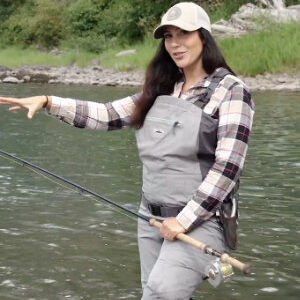
Most anglers spend years learning rods, lines, leaders, and casting techniques, yet many still arrive at the river wondering one thing: What should I tie on? During a recent conversation, April Vokey sat down with entomologist and longtime angler Ann Miller to explore the fascinating world of aquatic insects and the critical role they play in fly fishing success.
If you’ve ever wondered why one fly works perfectly on one stretch of river but gets ignored on another, this discussion breaks down how insect behavior, habitat, hatches, and trout feeding patterns all connect beneath the surface.
Certain Bugs Live In Certain Parts Of The River
Not every insect can survive in every part of a river. Water speed, oxygen levels, temperature, river bottom composition, and available food all influence what species thrive in a particular stretch of water. A fast rocky riffle creates a completely different environment than a slow silty pool or a wooded stream filled with leaves and fallen timber.
That matters because aquatic insects are highly adapted to the environments they live in. Some mayflies are built to cling tightly to rocks in heavy current, while others move through gravel or burrow into soft sediment along the river bottom. Other species are stronger swimmers and spend more time moving through the water column itself.
Hatch Timing Matters
Aquatic insects follow a fairly predictable seasonal pattern each year. In much the same way that certain flowers bloom in stages throughout the spring and summer, different insects emerge at specific times depending on water temperature, weather conditions, and the progression of the season.
That consistency gives anglers an advantage because it becomes easier to anticipate what insects may be active before ever stepping into the river. While cold winters or unusual weather can shift hatch timing slightly, understanding those seasonal windows helps narrow down fly choices and makes preparing for a trip far more effective.
The Mayfly Lifecycle Changes Everything
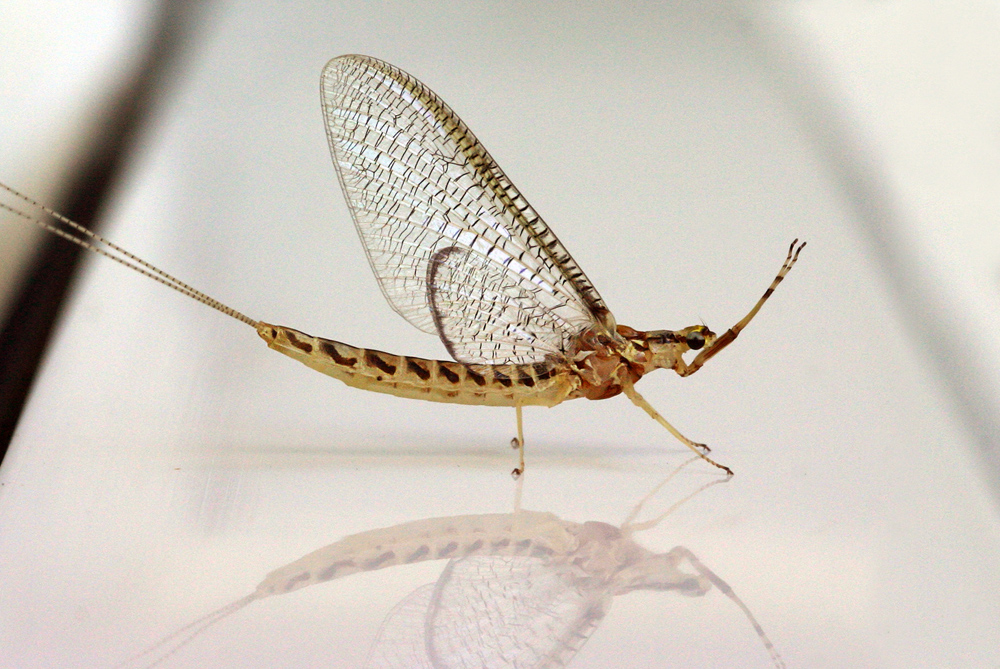
Mayflies remain one of the most important insect groups in fly fishing, and their lifecycle explains why trout feed so selectively during hatches. Eggs hatch into nymphs, the nymphs molt repeatedly over time, and eventually swim toward the surface to emerge into adults.
That emergence stage creates some of the easiest feeding opportunities trout will see all day. Some insects become trapped in the surface film as cripples or stillborns, leaving them vulnerable and easy to eat. In many situations, trout will ignore perfect dry flies while aggressively feeding on damaged or half-submerged insects that require almost no effort to catch.
Reading Trout Rise Forms
The way a trout rises can reveal a surprising amount about what it is feeding on and where those insects are sitting in the water column. Paying attention to those small differences can help anglers choose the right fly and presentation much faster.
- A subtle bulge below the surface often means trout are feeding on nymphs or emergers underwater.
- A porpoising rise usually points to insects sitting just below the surface film.
- A gentle sip commonly signals trout feeding on spent spinners floating directly on the surface.
Drift Periods Create Prime Feeding Windows
Aquatic insects naturally drift through the current during certain times of day, especially around dawn and dusk. During these periods, trout often shift their feeding behavior because more insects suddenly become available in the water column.
Some insects drift far more than others, including Blue Winged Olives, midges, scuds, and many caddis species. Recognizing those feeding windows can help anglers decide when nymphing techniques may outperform dry fly presentations.
Stoneflies And Caddis Add Another Layer
Stoneflies and caddisflies introduce completely different behaviors into a river system, which also changes how trout feed on them. Unlike mayflies that emerge through the surface film, stoneflies often crawl toward shore before emerging along rocks, vegetation, and shallow banks. That movement makes shoreline areas especially important when fishing stonefly nymph patterns.
Caddisflies bring even more variety. Some species build protective cases from gravel, sticks, or plant material, while others move freely through the current. One of the most important stages occurs when caddis pupae swim toward the surface to emerge as adults. During that short transition, they become highly vulnerable, often creating some of the most aggressive feeding activity trout anglers will see.
The Best Anglers Learn To Think Like Biologists
At the end of the day, becoming a better fly angler often comes down to slowing down and paying closer attention to what is happening beneath the surface. Trout feed with purpose, and the insects drifting through a river help explain nearly everything about where fish hold, when they feed, and what they are willing to eat.
For anglers who want to better understand the connection between entomology and fly fishing, Anchored Outdoors offers a growing library of classes and conversations designed to help anglers see rivers in a completely different way. Come join us today!